Swag
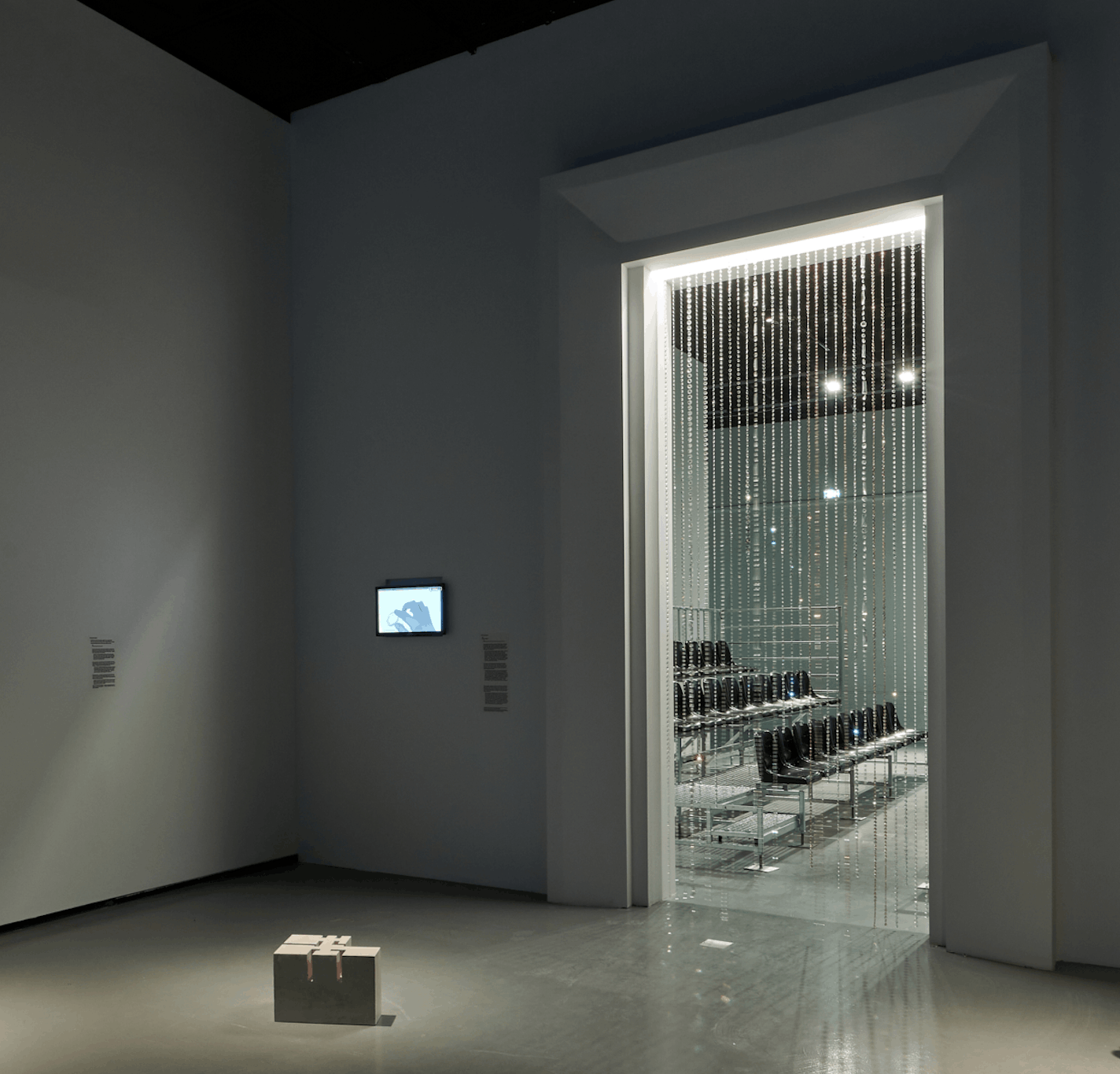
Installation
Crystals from chandeliers, video
Architecture: Ivan Melnychuk
The work was created in collaboration with Anastasiia Cherednychenko, a representative of the Ukrainian ICOM. Its central motif is a crystal from a chandelier in the Mariupol Drama Theatre. Cherednychenko drew attention to the object after it entered the collection of the State Central Museum of Contemporary History of Russia, where it was described as an exhibit from a theatre destroyed in March 2022.
Lada Nakonechna does not reconstruct the moment of the tragedy itself — the Russian attack on the theatre and the crimes committed against those seeking shelter within. Instead, she leaves space for the viewer to reconstruct the events themselves, without explicitly highlighting the manipulation to which this tragedy-stricken object is subjected. The artist sheds light on Soviet cultural policy — the idea of “palaces of culture”, symbolised by crystal chandeliers and private apartments, where they were meant to embody the vision of “palaces for the masses”. From this perspective, the deaths of adults and children in the Mariupol theatre — a Soviet palace of culture — appear as a tragic yet inherent element of this policy.
The work was commissioned by the Ujazdowski Castle Centre for Contemporary Art, Warsaw
Link to the video
Здобич
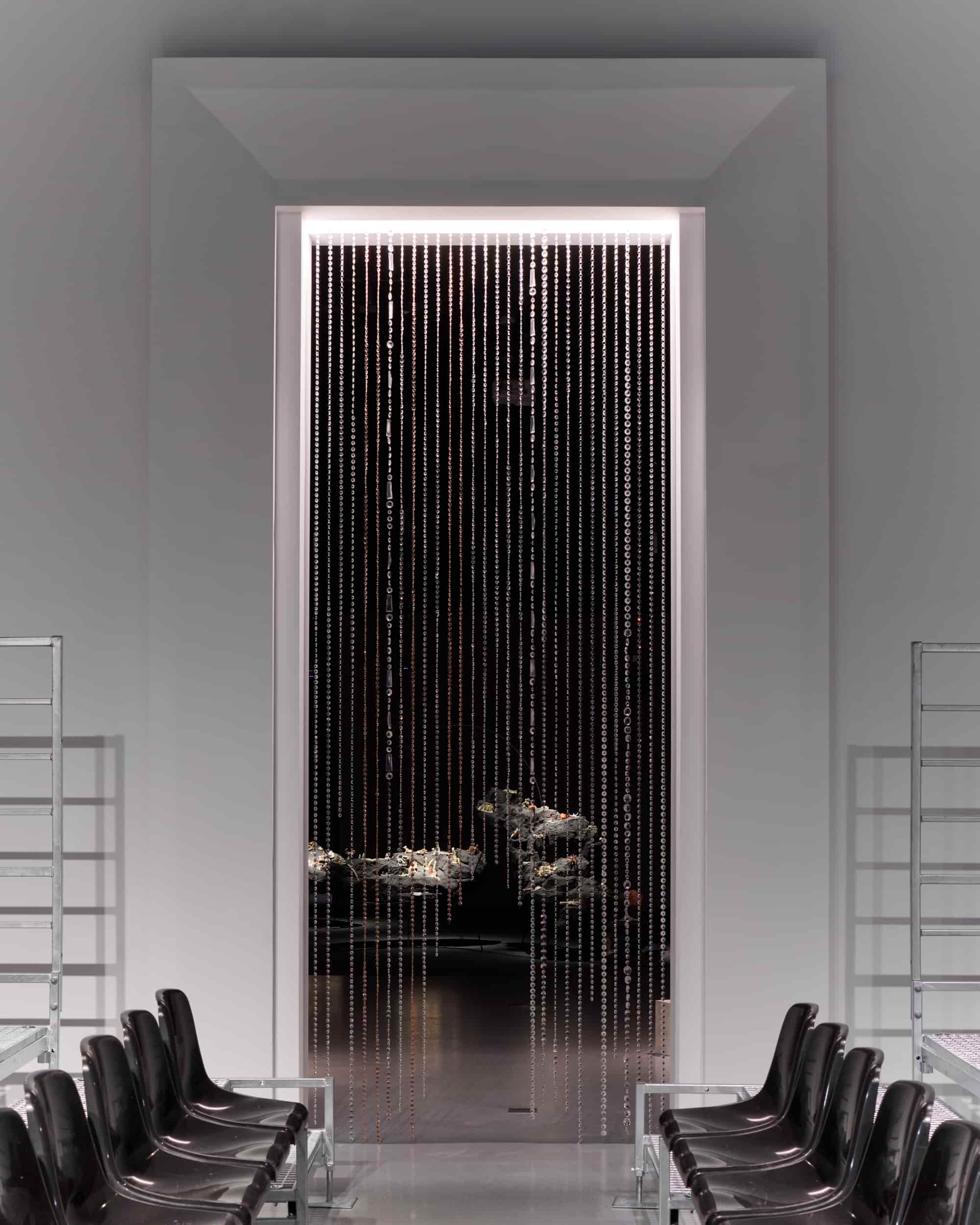
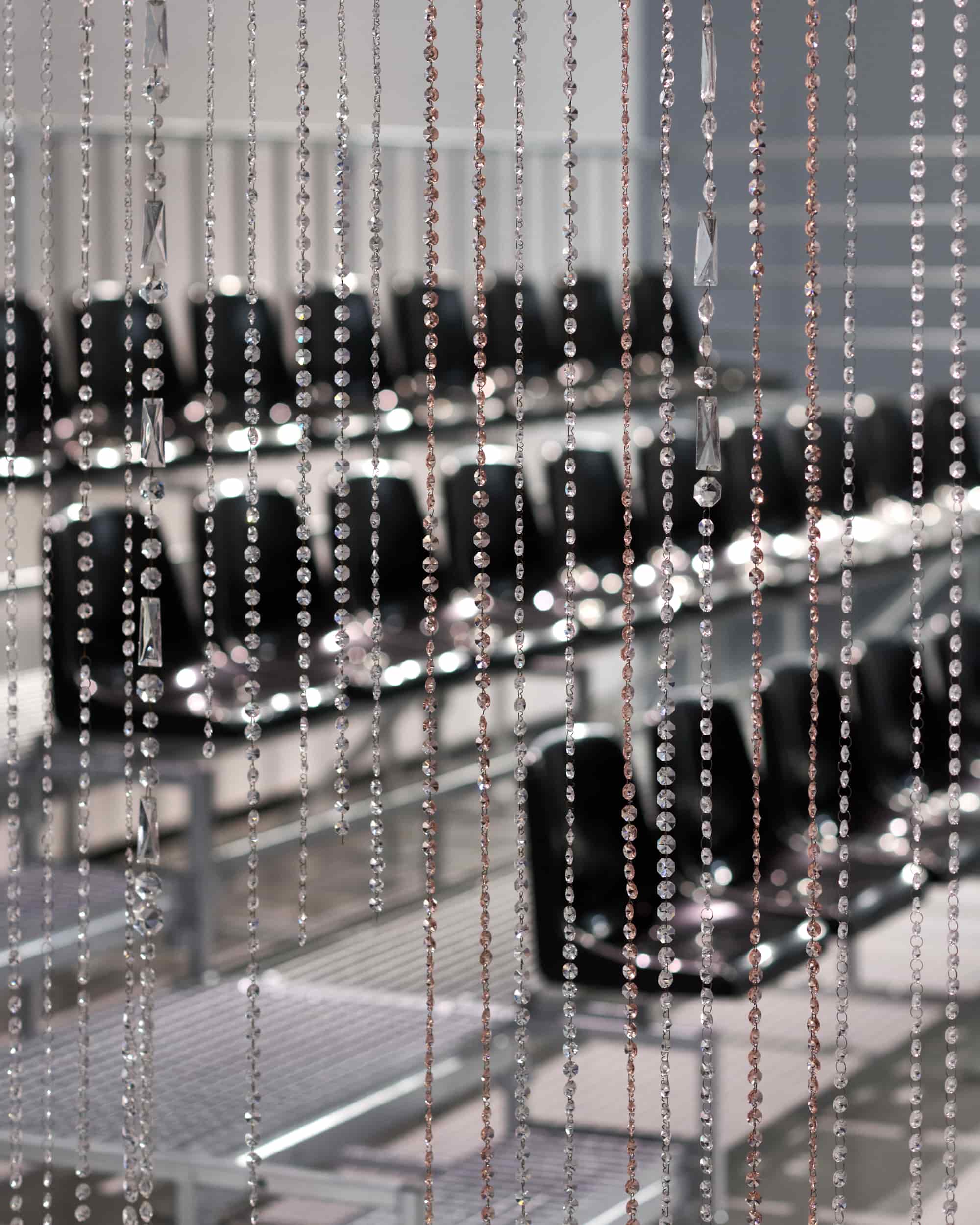
Інсталяція
Kришталі зі люстр, відео
Архітектурне рішення: Іван Мельничук
Робота створена у співпраці з Анастасією Чередниченко, представницею українського ICOM. Її центральним мотивом є кришталик із люстри Драматичного театру в Маріуполі. Чередниченко звернула увагу на те, що цей предмет потрапив до колекції Державного центрального музею сучасної історії Росії, як експонат, що походить із театру, зруйнованого в березні 2022 року.
Лада Наконечна не зосереджується на трагічному моменті злочину, скоєного російськими військовими проти людей, які шукали притулку в Драматичному театрі в Маріуполі. Вона залишає глядачеві простір для самостійної реконструкції подій, навіть не підкреслюючи очевидної маніпуляції, якій на наших очах піддається цей позначений трагедією предмет. Художниця проливає світло на радянську культурну політику — ідею палаців культури з обов’язковими в них люстрами та приватних квартир, у яких кришталева люстра втілювала концепцію «палаців для мас». У цій перспективі смерть дорослих і дітей у маріупольському театрі — радянському палаці культури — постає як невід’ємний елемент культурної політики.
Робота була реалізована на замовлення Центру сучасного мистецтва Zamek Ujazdowski, Варшава